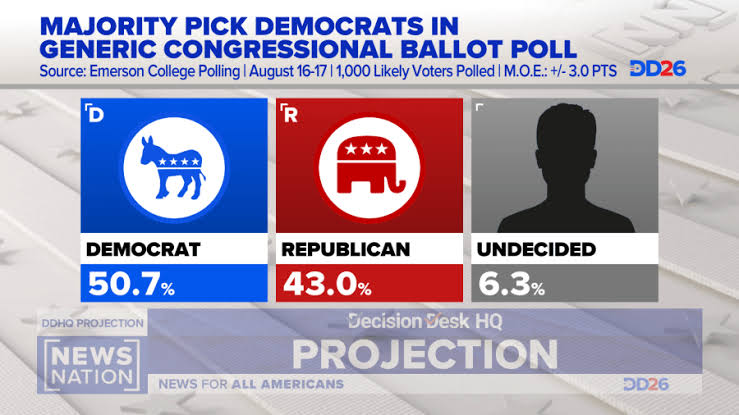
A new national survey suggests Democratic voters are more engaged in this year’s midterms, while many Americans remain unhappy with the country’s direction. The poll also finds the economy near the top of voters’ concerns, giving both parties a familiar but difficult issue to address.
Pew Research Center surveyed adults from September 28 through October 4. Among registered voters, Democrats held a 44% to 36% advantage in preference for which party should control the House, with 15% unsure. That is a snapshot of opinion—not a prediction of the final result.
What the poll says about Democratic voters
Democratic voters were more likely than Republicans to say control of Congress matters to them. That enthusiasm gap can affect turnout, but polling about interest is not the same as the number of people who will actually cast ballots.
The poll also recorded a 30% job-approval rating for Trump. Approval can influence how voters think about congressional control, yet a single survey does not explain every person’s choice or how local races will develop.
The difference between national mood and district outcomes is important. House elections are decided one district at a time. Candidate quality, campaign resources and local concerns can shift results even when national polling points in one direction.
The economy remains a shared concern
About 84% of respondents said the economy was important to their vote. That number includes people who may disagree strongly about what is driving costs or which policies would help.
Democrats may focus on household affordability, wages and health coverage. Republicans may emphasize taxes, jobs or the administration’s economic agenda. Voters can compare those claims with actual proposals and trackable results rather than relying on a broad promise.
Why the numbers are not a forecast
Polls can change as campaigns intensify, and turnout patterns are hard to measure before Election Day. Undecided voters may not split evenly, and the people who answer surveys may not mirror the people who ultimately vote.
The survey is useful as a measure of the current environment. It suggests Democrats have an engagement advantage and that economic concerns are widespread. It does not say which party will win the House, nor does it guarantee that enthusiasm translates into a seat count.
What to watch before voters decide
Look for new polling to show whether the gap persists, and compare national findings with state and district surveys. Also watch registration, early voting and campaign spending, while remembering that none of those measures alone determines the result.
Our earlier story on speculation around Trump’s future covers another part of the political climate. For campaign messaging around the midterms, see this related report.
Why enthusiasm matters—but cannot predict everything
High interest can help a campaign persuade supporters to volunteer, donate or make a voting plan. Those activities can strengthen turnout efforts, but enthusiasm is only one part of the election. Weather, registration rules, local candidates and the issues that dominate late in the campaign can all influence participation.
Polling also has a margin of error and depends on how the questions are asked. Readers should compare the survey dates, sample and wording before placing too much weight on a single number. A result is most useful when it is viewed alongside other recent surveys and actual election data.
For a fair comparison, pay attention to whether a poll asks about a specific candidate or simply which party voters prefer for Congress. Those are related but different questions. A national preference measure can show the broader mood, while district surveys may better reflect the local race that determines an individual House seat.
The survey’s finding that economic issues matter to many respondents does not mean voters agree on a solution. One person may prioritize prices, another employment or health coverage. Campaigns will have to make their proposals concrete enough for voters to compare tradeoffs, not just repeat that the economy is important.
1 thought on “Poll Finds Democratic Voters More Engaged as Midterms Near”