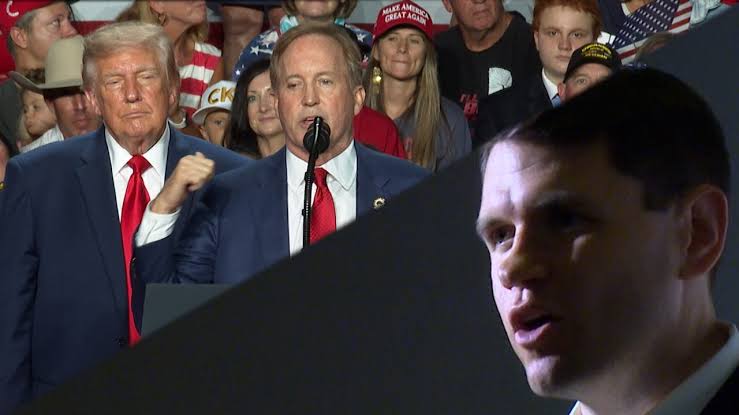
The Texas Senate debate has become a campaign story after Donald Trump publicly urged Democrat James Talarico and Republican Ken Paxton to face off. Talarico said he would take part, but a debate date and format have not been announced.
That distinction is important: a candidate’s agreement to debate does not mean both campaigns have settled the details. Paxton had not publicly responded to Trump’s suggestion in the Associated Press report, leaving the proposal short of a confirmed event.
How Trump brought the debate into the race
Trump’s post drew attention to a contest that has so far been heavily shaped by advertising and campaign appearances. Talarico had been unable to attend a recent event because he was sick, and the president used the moment to call for a debate between the nominees.
Talarico responded that he was willing to debate. His answer gave him a chance to frame himself as open to direct questions, while also putting pressure on Paxton to say whether he would participate. But until both sides agree on rules, dates and moderators, the race still has no scheduled face-off.
Why the Senate race is drawing so much attention
The contest is a major test of party strength in Texas. Democrats see an opportunity to compete statewide, while Republicans are trying to protect a seat in a state where the party has held a strong position for years.
Campaigns and outside groups have spent heavily on the race. The AP reported that combined spending by campaigns and allied groups had exceeded $247 million. That kind of investment can flood television and digital feeds, but it does not tell voters how the candidates would approach the job.
A debate could provide a clearer comparison of their policy priorities and how they handle follow-up questions. It could also become a tightly managed performance, especially if each campaign negotiates topics and timing. Voters should look for substantive answers rather than assuming a sharp exchange settles the larger issues.
What voters should watch for
First, watch whether Paxton responds and whether the campaigns agree on a public format. Second, note which topics each side wants included. The choice of moderators and the opportunity for follow-up questions can affect whether a debate informs viewers or simply produces short clips.
Campaign claims should also be checked against public records and the candidates’ policy statements. An event can add useful information, but it cannot replace a careful look at their proposals on jobs, health care, immigration and the economy.
The debate is not confirmed yet
For now, the Texas Senate debate is a proposal with one candidate’s public acceptance—not an event on the calendar. The next move belongs to the campaigns, which will need to turn the challenge into an agreement.
Read our related report on Trump’s Texas campaign stop, and see this story about another Trump political warning for more campaign context.
What a useful debate could add
A well-run forum would give each campaign a chance to explain specific proposals in full sentences, not just in short paid messages. It could also let voters compare how the candidates handle an unexpected follow-up. That kind of contrast is useful even when viewers already know which party they usually support.
Campaign debates have limits, too. A single evening cannot cover every issue, and moderators have to decide how much time to give each topic. Voters can make the event more informative by checking claims afterwards against public records and official policy documents.
Even if no debate takes place, voters can still compare the candidates through town halls, campaign websites and public records. The key is to look at the same questions for both: what they propose, how they would pay for it and what evidence supports their claims.
Local reporting will matter as the race develops. Voters can follow official campaign announcements and compare them with independent coverage, especially when a debate date or format is finally confirmed. Until then, the challenge is newsworthy, but it should not be described as a scheduled debate.
Source: Associated Press, October 8, 2026.